
 Login with Google
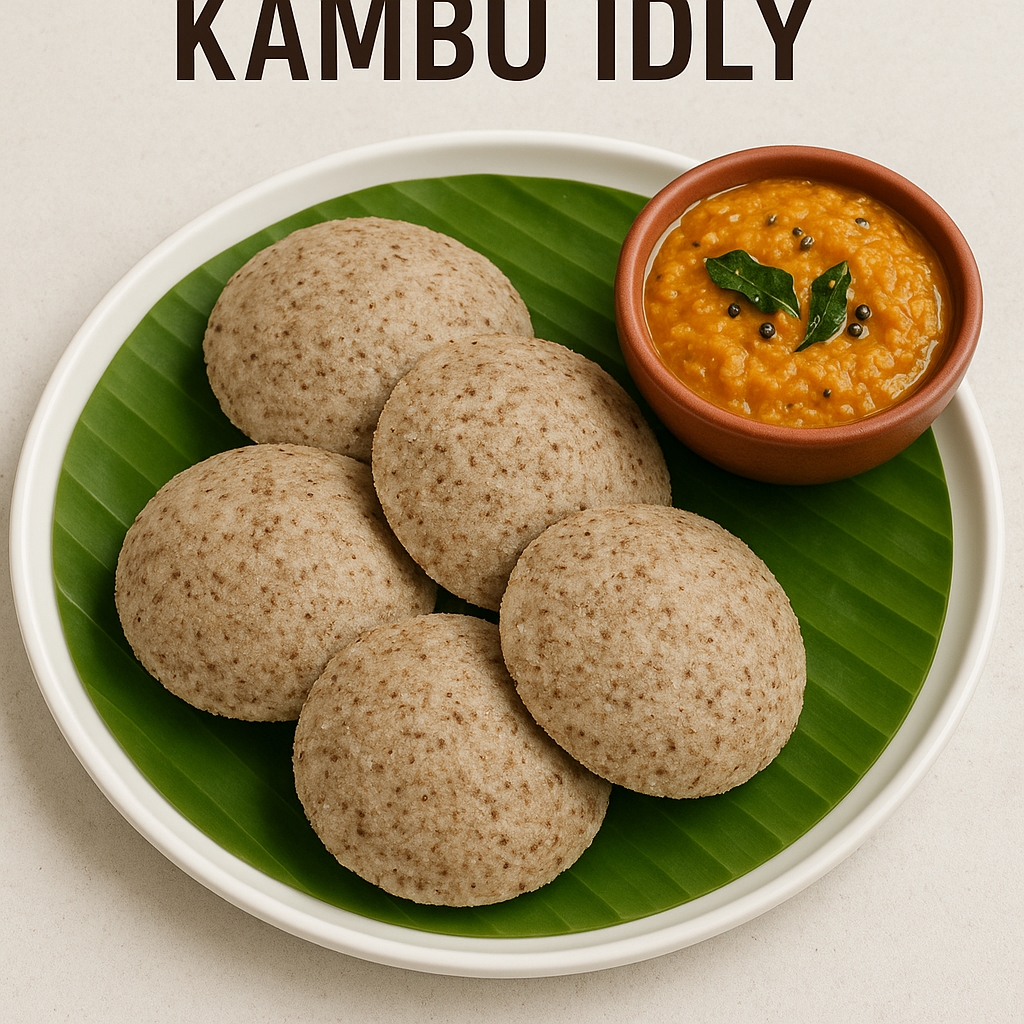
[PROS]
- High in dietary fiber, supporting gut motility and prolonged satiety
- Low glycemic index, helping prevent sharp postprandial glucose spikes
- Abundant in micronutrients, notably non-heme iron, magnesium, and phosphorus
[CONS]
- Contains natural goitrogens, which warrants caution in individuals with untreated hypothyroid conditions
- Denser mouthfeel and distinct grain flavor that may take time to adapt to if accustomed to white rice idlis
[DIETITIAN REVIEW]
Score: 9/10. An outstanding alternative to refined grain breakfasts, this dish pairs complex whole-grain millet carbohydrates with gut-supportive microbial fermentation and lean plant protein from urad dal. It is an exceptional dietary choice for individuals managing diabetes, insulin resistance, or weight management.
| Ingredient | Qty |
|---|---|
| Kambu (Pearl millet) | 3 cups |
| Urad dal (Whole white lentils) | 1 cup |
| Fenugreek seeds | 1 tbsp |
| Salt | to taste |
| Water | as needed |
1. 1. Thoroughly rinse the kambu (pearl millet) in clean water 2 to 3 times, then soak it in ample water for 5 to 6 hours.
2. 2. In a separate bowl, rinse the urad dal and fenugreek seeds together, soaking them in water for about 3 to 4 hours.
3. 3. Drain the urad dal and fenugreek seeds, transferring them to a wet grinder or high-powered blender; grind with ice-cold water in intervals until light, airy, and frothy.
4. 4. Drain the soaked kambu and grind it separately with minimal water into a slightly grainy, smooth paste.
5. 5. Combine both batters together in a large mixing bowl, add salt to taste, and aerate well by mixing vigorously with clean hands.
6. 6. Cover the bowl loosely and allow the batter to ferment undisturbed in a warm environment for 8 to 10 hours until doubled in volume.
7. 7. Lightly oil idli plates, gently spoon the fermented batter into the cavities without deflating the air pockets, and steam on high for 10 to 12 minutes until a toothpick inserted comes out clean.